
Compassion: A Quiet Strength in a Loud World
Let’s Talk About Kindness (the Real Kind)
Here’s something I keep bumping into, in conversations, in the news, even in myself: people are tired. Not just physically, but emotionally. Disconnected. Running on empty.
And yet, we all seem to want the same thing. Connection. Softness. Something real.
But here’s the twist: even though we’re craving kindness, we’re not always great at offering it. Not the performative kind. I mean the quiet, everyday kind that no one claps for. The kind that asks nothing in return.
That’s where compassion comes in.
I first heard a deeper take on compassion through a Buddhist podcast .
The message? Compassion isn’t pity. It’s not weakness. It’s the courage to sit with pain, yours, mine, anyone’s, without rushing to fix it.
That hit me hard. And honestly, it changed how I moved through the world. So let’s take a moment to unpack what compassion really is, why it matters, and how to bring more of it into our daily lives, without burning out.
What Compassion Actually Means
Let’s clear this up right away: compassion is not the same as pity.
The word comes from Latin, com pati , which means “to suffer with.” It’s not about standing above someone with sympathy. It’s about getting beside them and saying, “I’m here with you.”
It’s not always glamorous. Sometimes it’s awkward, uncomfortable, even inconvenient. But it’s real.
Whether it’s staying present when someone’s crying, or holding space for someone’s anger, compassion says: I’m not turning away.
Why It’s So Hard Lately
Here’s the thing, we’re built for compassion. But we’ve created lives that make it harder to practice.
We’re distracted, like, all the time. Our attention is split between emails, news, texts, and whatever’s trending. Compassion needs presence. Distraction starves it.
We’re afraid of feeling too much. Vulnerability isn’t exactly encouraged in most workspaces or social feeds.
And let’s be honest, a lot of us are just plain worn out. If your emotional gas tank is on E, it’s hard to offer warmth to anyone, even yourself.
This is where mindfulness makes a huge difference. It helps us slow down just enough to see what’s actually happening, inside and around us, without freaking out or numbing out.
Mindfulness Is the Root of It
Mindfulness isn’t some spiritual buzzword…, it’s just a way of saying: Pay attention, gently.
When we practice mindfulness, we start noticing the little things: the tightness in our chest, the sigh in someone’s voice, the tension hiding under a smile. We stop skipping past pain and start seeing it.
And when we see it, we can meet it with care.
Compassion flows from that space. Not as a performance, but as a real response.
What the Science Says (Because It’s Nice to Know It’s Not Just Vibes)
Research backs this up, by the way.
Studies show that compassion can lower stress hormones like cortisol and increase oxytocin, the hormone that helps us feel safe and connected. Brain scans of people who practice compassion meditation show more activity in areas linked to empathy and emotional regulation.
Translation: being kind is literally good for your well-being. Like, medically. Emotionally. Relationally.
So, How Do We Practice Compassion?
Let’s get practical. You don’t need to overhaul your life. Try this:
1. Look Pain in the Eye
Next time you notice someone struggling (or you feel like crumbling yourself), pause. Take one breath. And silently say: This person wants to feel okay. Just like me.
It sounds simple. But it softens something inside.
2. The “Just Like Me” Trick
Stuck in traffic? Frustrated with someone? Try this mental reframe:
They want to feel loved, just like me.
They make mistakes, just like me.
They have rough days, just like me.
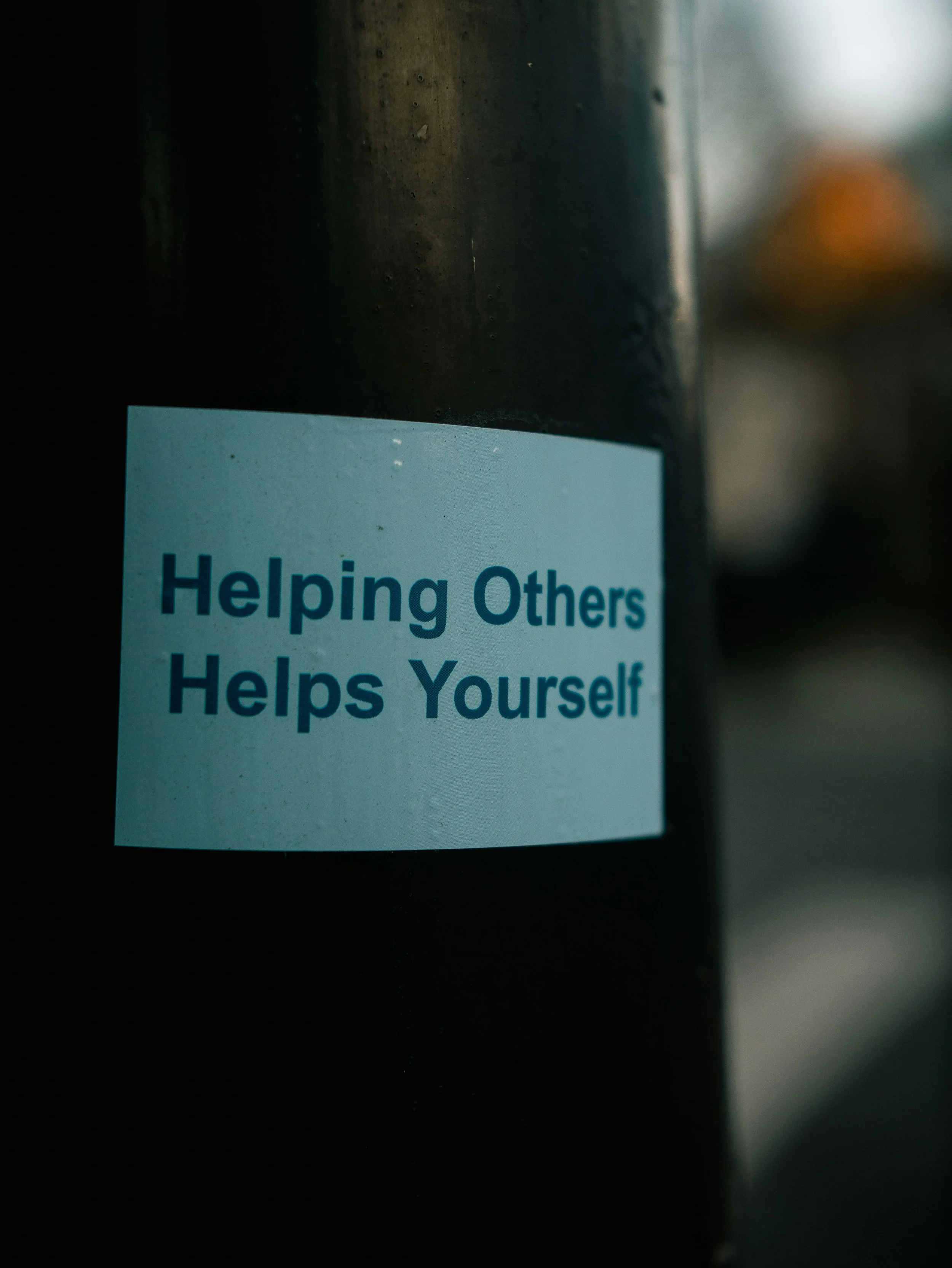
A picture shows that helping others truly benefits yourself meaningfully.
It won’t stop bad behavior, but it adds some kindness to the moment.
3. Start with Yourself
We can’t be kind to others if we’re brutal with ourselves.
When that inner critic pipes up, try responding like you would to a friend: You’re doing your best. You’re learning. You’re allowed to get it wrong sometimes.
Self-compassion isn’t indulgent. It’s foundational.
4. Tiny Moments Matter Most
Look someone in the eye when you say thank you
Put your phone down when someone’s talking
Ask, “How are you really?,.and stick around for the answer
Let someone merge in traffic without getting salty
These aren’t grand gestures. They’re habits. And they add up.
The Burnout Trap (And How to Avoid It)
Compassion is powerful, but it’s not limitless. If you’re always pouring into others without replenishing yourself, you’re going to run dry.
Protect your energy:
Say no when you need to
Rest without guilt
Use mindfulness to check in with yourself regularly
Boundaries are not anti-compassion. They’re what make compassion sustainable.
A Culture Shift Worth Making
We live in a world that rewards hustle, sharpness, and “winning.” But deep down, most of us know: connection matters more than competition.
Every major spiritual tradition has some version of this: treat others with the care you wish to receive. It’s simple. And still, it’s radical.
Choosing compassion, even quietly, is a kind of revolution.
Final Thought: Begin With One Moment
Compassion doesn’t need a schedule, a guru, or a hashtag. It just needs one moment of willingness. A small pause. A softer tone. A bit more patience, especially when it’s hard.
So here’s your invite: try it today. You don’t have to get it perfect. Just start.
A Small Practice to Try
Kindness matters
Think of someone who’s gotten under your skin recently. (Yes, them.)
Close your eyes. Take a breath. And quietly say:
They’re human, just like me. They want to feel okay. Just like me.
Then go drink some tea. You’re not failing. You’re practicing.
And that’s enough.