
Reframing Anger: A Mindful Journey Toward Inner Balance
Introduction: The Fire Within
Anger is one of those universal human emotions that has a way of catching us off guard. It can roar up suddenly or simmer quietly for days, leaving behind both emotional and physical traces. While often seen as something destructive or shameful, anger is deeply revealing. It shines a spotlight on the very things we hold dear, our boundaries, our expectations, and our hidden fears.
In mindfulness practice, anger isn't seen as the enemy. Instead, it's approached as a signal, sometimes a flare for help, other times a doorway to deeper self-knowledge. Over the years, through meditation and mindful observation, I’ve learned that the key isn’t to silence anger, but to listen carefully to what it’s trying to say. That kind of attention can lead to surprising clarity, even healing.
Getting to Know Anger: Shades and Signals
Anger doesn’t show up in a single, predictable form. It can feel like a fleeting twinge of frustration or a storm of fury. Physically, it often kicks off with a quickened heartbeat, tension in the shoulders, maybe a clenching in the jaw or fists. Mentally, thoughts narrow and sharpen, as if the mind is bracing for battle.
But beneath that reaction, anger is often just pointing to a deeper truth: something feels off. Something isn’t right. And in that sense, anger can be informative. It’s what we do next that determines whether it becomes harmful or helpful.
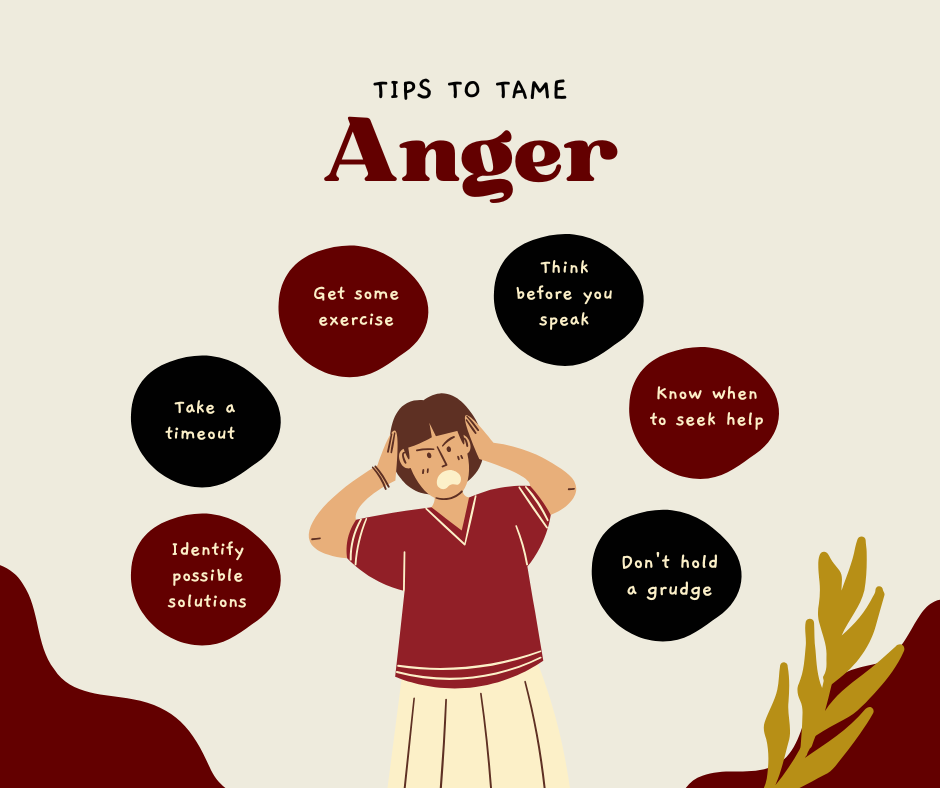
How to Manage Anger Mindfully
The Pain Beneath the Fire
From a mindfulness standpoint, anger often points to something deeper than just irritation, it’s a kind of distress signal. In Buddhist thought, there’s the idea of dukkha, a quiet tension or restlessness that underlies much of human experience. Anger tends to flare up when that tension hits a nerve, when something we care about feels threatened or disrespected. But here’s the twist: while anger reacts to discomfort, it also adds fuel to the fire. The very act of holding onto it, gripping it like a shield, can deepen the very unease we’re trying to escape.
Two Common But Unhelpful Paths
Without awareness, most of us fall into one of two camps when it comes to anger:
We shove it down and pretend it doesn’t exist.
Or we let it explode outward in a torrent of words or actions.
Both approaches are understandable. Cultural norms, family dynamics, and personality all shape how we learn to deal with this emotion. But repression can lead to resentment, anxiety, or even illness. And unchecked expression, though momentarily satisfying, often damages relationships and leaves us feeling guilty or misunderstood.
The Mindful Middle Way
Here’s where mindfulness offers an alternative. It doesn’t demand that we fight anger or obey it. Instead, it asks us to notice it, name it, and explore it.
That doesn’t mean being passive. Rather, it means being present. When I started observing my anger with this kind of compassionate curiosity, I noticed it had a lot to teach me. It often masked hurt, fear, or unmet needs. And once I could see that, the emotion softened.
Noticing the Spark Before It Catches
The first real shift comes when we learn to recognize the early signs. Maybe it’s a flush of heat, a tightening somewhere in the chest, a particular thought loop that always sets things off. Meditation helped me become familiar with those signals, and that awareness created just enough space to pause.
That pause? It's powerful. It breaks the chain reaction. Suddenly, there’s room to ask: What’s really going on here?
Making Room Without Reacting
Allowing anger to be there without pushing it away or acting on it immediately is harder than it sounds. But it’s also where transformation begins. You don’t have to like what you’re feeling. You just have to acknowledge it.
In that space, anger begins to shift. It may still burn, but it doesn’t control you. Instead of a wildfire, it becomes a candle, something you can hold, examine, even learn from.
The Choice to Act (or Not)
Recognizing anger doesn’t mean you need to react. That insight alone is freeing. There’s a subtle but profound difference between feeling anger and acting from it. Sometimes, the best move is saying nothing. Other times, speaking clearly and firmly, but not aggressively, can be the wisest path.
The trick is intention: are you acting from clarity, or from a compulsion to strike back?
Why Meditation Matters
Meditation doesn’t just help manage anger in the moment, it changes the soil where anger grows. When the mind is cared for regularly, it's more resilient, more spacious. You begin to notice irritations without being swept up by them.
Qualities like patience, compassion, and humility start to grow. Not because you're trying to be good, but because the mind becomes less reactive and more curious.
Mapping Your Triggers
Everyone's anger has its own fingerprint. For me, certain situations reliably sparked it, feeling dismissed, not being heard, making a mistake in front of others. Digging deeper, I realized fear and pride were often underneath.
The more I paid attention, the clearer it became: anger wasn’t random. It had patterns. And within those patterns were stories I needed to examine.
Forgiveness: Letting Go of the Long Burn
Some anger doesn't pass quickly. It settles in and becomes part of the background. Holding onto it might feel justified, even righteous. But over time, it weighs us down.
Forgiveness, in the mindfulness sense, isn’t about excusing bad behavior. It’s about releasing yourself from the grip of the past. It's slow work. But as those inner knots loosen, there's a lightness that returns.
Simple Practices to Begin With
Here are a few techniques I return to when anger shows up:
Take three deep breaths before responding.
Silently label the emotion: “Anger is here.”
Notice where it sits in your body.
Imagine sending kindness to yourself and the person involved.
Later, reflect on what the anger revealed about your values or boundaries.
These mindfulness tools for anger management promote emotional resilience and support holistic wellness.
Seeing Anger with New Eyes
Eventually, mindfulness reshapes our relationship with anger. You stop seeing it as a problem to avoid and start seeing it as information to work with.
Anger, when understood, can fuel healthy change. It can help us set limits, stand up for others, or take action where it's needed. The key is how we meet it: with curiosity instead of judgment, with intention rather than reflex.
Conclusion: Tending the Inner Fire
Anger won’t vanish from your life. But it doesn't have to rule it either. With mindfulness, each moment of irritation becomes a chance to choose differently,to soften, to breathe, to understand.
And sometimes, in the quiet that follows that choice, we find something unexpected: not just peace, but a deeper connection to ourselves.
Try It for Yourself
Start your mindfulness journey today. Set aside just a few minutes a day. Watch your emotions come and go. Notice how anger feels, how it moves, what it wants. With time, you might find that the fire cools on its own, leaving behind something surprisingly luminous: clarity, strength, and ease.